
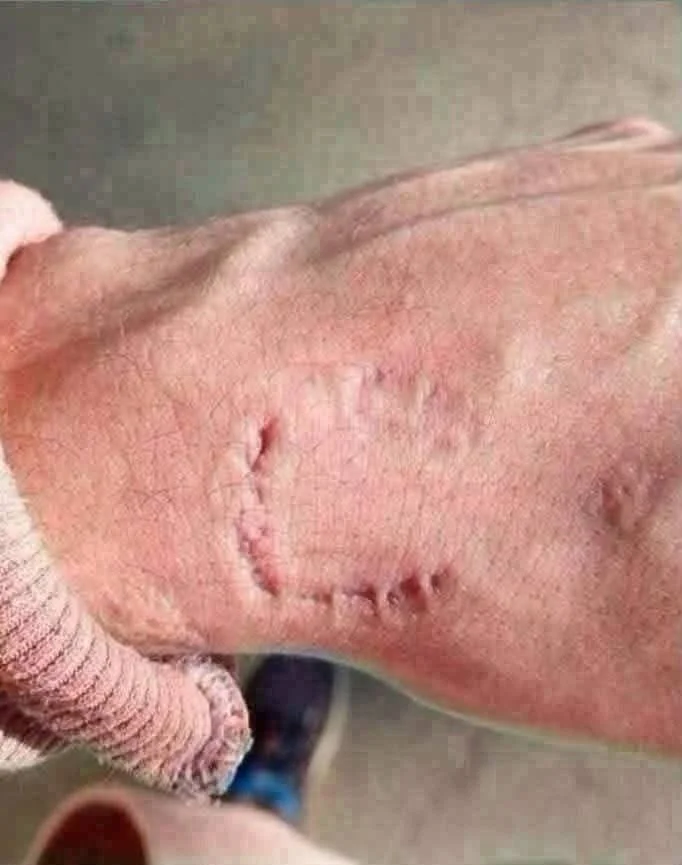
An unsettling image showing what appear to be bite-like marks on a person’s arm has circulated alongside a shocking caption: “The teacher bites the student after he asks him…” The incomplete headline leaves many questions unanswered. What happened before the incident? Why would an adult responsible for educating children hurt a student? And what should parents and schools do when a child comes home with unexplained injuries?
Although the photograph alone cannot establish who caused the marks or explain how they occurred, the situation described in the caption raises an important issue: physical violence against students by teachers or other school staff is unacceptable and must always be taken seriously.
Schools are supposed to be places where children feel protected, respected, and encouraged to learn. Teachers have an important responsibility not only to educate students but also to maintain a safe environment. When that trust is broken, the consequences can extend far beyond the visible injury.
Why the Caption Raises Serious Concerns
Teachers hold positions of authority. Students are generally expected to follow classroom rules, listen to instructions, and respect their educators. However, this authority comes with responsibility.
A teacher may become frustrated when a student interrupts a lesson, refuses to follow instructions, asks repeated questions, or behaves disruptively. Nevertheless, frustration never justifies physical punishment.
Biting, hitting, pushing, threatening, or deliberately injuring a student is not an acceptable form of discipline. Children have the right to learn without fearing that an adult might hurt them.
The caption accompanying the image suggests that a student may have asked a question before an alleged incident occurred. If that description were accurate, the circumstances would make the situation particularly troubling. Asking questions is a normal and essential part of learning. Students should never be punished for wanting clarification or expressing curiosity.
It is also important not to assume that the photograph proves the caption’s story. Images shared online can lose their original context, and descriptions may be exaggerated or entirely inaccurate. The identity of the people, the origin of the marks, and the circumstances surrounding the photograph would need independent verification.
What Could Bite-Like Marks on the Skin Mean?
The marks visible in the photograph appear to form a curved pattern, but an image cannot reliably establish their cause.
Human bite injuries can sometimes leave curved impressions, bruising, broken skin, or marks resembling an arch. However, other injuries and skin conditions can produce unusual patterns as well.
A medical professional can examine an injury and determine whether it is consistent with a bite or another cause. The appearance of a wound alone is not enough to identify who caused it or establish exactly what happened.
If a child has an unexplained injury, parents should avoid immediately making assumptions. Instead, they should document what they observe, listen carefully to the child’s explanation, and seek appropriate medical attention.
When the skin is broken, the possibility of infection should also be considered. Human bites can introduce bacteria beneath the skin, potentially causing redness, swelling, pain, warmth, or discharge. A healthcare professional should assess any suspected human bite that breaks the skin, particularly when the injury is deep or located near a joint.
The Responsibility Teachers Have Toward Students
Teaching is more than delivering information from textbooks. It involves guiding young people, helping them develop confidence, and creating an environment in which they can make mistakes without being humiliated or frightened.
Children have different personalities and learning styles. Some are naturally quiet, while others ask many questions. Some understand a subject immediately, while others need additional explanations.
A responsible teacher recognizes these differences.
When a student behaves inappropriately, the teacher should respond through appropriate classroom management. Depending on the situation, this may involve explaining expectations, speaking privately with the student, contacting parents, or involving school administrators.
Physical aggression has no place in this process.
A teacher who loses control and harms a student can cause both physical and emotional damage. The student may become afraid of attending school, lose confidence, or develop anxiety around adults in positions of authority.
The Emotional Effects of Violence at School
Visible injuries may heal, but the emotional consequences of violence can last much longer.
A child who is hurt by someone they are expected to trust may experience confusion, embarrassment, fear, or shame. They may wonder whether they did something wrong or whether speaking about the incident will make the situation worse.
Some children become unusually quiet after a frightening experience. Others may become angry, have difficulty sleeping, complain of stomachaches, or suddenly refuse to attend school.
Not every child responds in the same way. Some may describe what happened immediately, while others need time before they feel comfortable discussing it.
Parents should pay attention to changes in behavior, especially when they occur alongside unexplained injuries or sudden anxiety about school.
The most important message a child should hear is simple: being hurt is not their fault, and they can speak to a trusted adult without being blamed.
What Should Parents Do If Their Child Comes Home Injured?

