
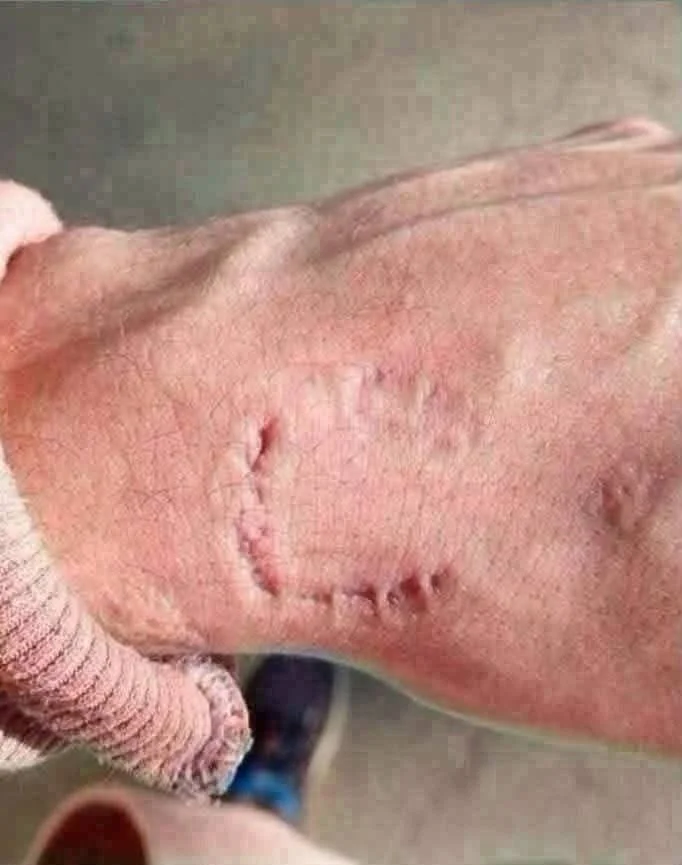
Discovering an unexplained injury on a child’s body can be frightening. Parents may feel angry, confused, or desperate for answers. However, responding calmly and carefully can help protect the child and establish what happened.
1. Listen Without Blaming the Child
Start by asking the child what happened in a calm, supportive manner.
Avoid leading questions that suggest a particular answer. Instead of asking, “Did your teacher bite you?”, consider asking, “Can you tell me how this happened?”
Allow the child to explain in their own words. Do not interrupt, threaten, or pressure them to provide details.
Children may struggle to describe an upsetting experience, especially if they are frightened. Give them time.
2. Examine and Document the Injury
If the child has visible marks, document their appearance with photographs, provided this can be done appropriately and respectfully.
Record the date, time, and any explanation the child gives. Keep the information factual rather than adding assumptions about who caused the injury.
If the skin is broken, there is significant swelling, or the child is experiencing pain, arrange a medical examination.
3. Seek Medical Attention When Necessary
A suspected human bite that breaks the skin should be assessed by a healthcare professional. Depending on the injury, treatment may include cleaning, wound care, antibiotics, or evaluation of vaccination status.
Discover more
Herb
HERB
Ear
Seek urgent medical care for deep wounds, uncontrolled bleeding, severe pain, spreading redness, fever, or signs of infection.
Medical documentation may also help establish the nature and extent of an injury.
4. Contact the School Administration
Parents should report serious concerns to the school principal or appropriate safeguarding authority.
Ask the school to investigate the incident, preserve any relevant CCTV footage, identify possible witnesses, and explain what steps will be taken to protect the child.
A serious allegation should not be dismissed as an ordinary classroom disagreement.
5. Report Suspected Abuse Through Appropriate Channels
If there is credible reason to believe that a child has been physically abused, parents should contact the appropriate child-protection or law-enforcement authorities in their area.
The priority must be the child’s safety. If there is an immediate risk of further harm, the child should not be left in a situation where the suspected person has unsupervised access to them.
Why Children Sometimes Stay Silent
One of the most difficult aspects of school abuse is that children do not always report what happened.
Discover more
Find Treatments
Read Med Journals
Time Change
A student may fear that the teacher will become angry, that classmates will laugh, or that parents will blame them. Some children worry that reporting an incident could lead to punishment or trouble at school.
Others may not understand that an adult’s behavior was inappropriate, particularly if the adult tells them that the incident was their fault.
This is why parents and schools should create an atmosphere in which children feel comfortable speaking openly.
Parents can encourage communication by regularly asking about school experiences, friendships, classroom activities, and interactions with teachers. These conversations should feel natural rather than like interrogations.
Children should also be taught that they can say no to inappropriate physical contact and seek help from a trusted adult whenever they feel unsafe.
How Schools Can Prevent Physical Abuse
Preventing violence requires more than reacting after an incident occurs. Schools need clear policies, responsible supervision, and effective reporting procedures.
Teachers and other school employees should receive training in positive discipline, conflict management, child development, and safeguarding.
Schools should establish clear rules explaining that physical punishment, intimidation, humiliation, and abusive behavior are prohibited.
Discover more
Study Chemistry
Shop Craft Beers
Study Anatomy
Students should have a safe way to report concerns without fearing retaliation. Administrators should take complaints seriously, investigate them fairly, and communicate appropriate protective measures to parents.
It is equally important to recognize that teachers sometimes work under difficult conditions. Large classrooms, limited resources, stress, and challenging student behavior can create pressure. Schools should provide educators with support and practical strategies for managing difficult situations.
However, professional stress does not excuse violence. Adults working with children must remain accountable for their actions.
Why Online Images Should Be Examined Carefully
Shocking photographs often spread rapidly because they provoke strong emotional reactions. A dramatic caption can make people immediately angry or encourage them to share the image without checking its origin.
But photographs do not always tell the complete story.
An image may be old, taken in a different country, or unrelated to the description attached to it. Sometimes a photograph is shared without permission or without information about the person pictured.
In this case, the visible marks cannot independently prove that a teacher caused them. It would be irresponsible to identify or accuse anyone based solely on the photograph and an incomplete caption.
Discover more
Order Calendars
Order Vitamins
vitamin
That does not mean concerns about student safety should be ignored. Rather, it means that allegations must be investigated carefully, with attention to the child’s welfare and the available evidence.
Responsible discussion protects both children who may have experienced abuse and people who could otherwise be falsely accused.
Every Student Deserves to Feel Safe
A classroom should be a place where children can ask questions, make mistakes, express their thoughts, and learn at their own pace.
A student should never have to worry that asking for an explanation will lead to humiliation or physical harm. Teachers are entrusted with an important responsibility, and that responsibility includes protecting the dignity and safety of every child.
If the incident described in the caption is confirmed, it should be treated as a serious safeguarding matter, not as a joke, an unusual disciplinary method, or an ordinary disagreement between a teacher and a student.
At the same time, the photograph itself should not be treated as proof of the allegation. The facts must be established through proper medical assessment and investigation.
Ultimately, the most important question is not how shocking an image looks, but whether a child may have been harmed and what can be done to keep that child safe.
No question, mistake, disagreement, or classroom disturbance gives an adult the right to injure a student. Education should build confidence and knowledge—not fear.

