
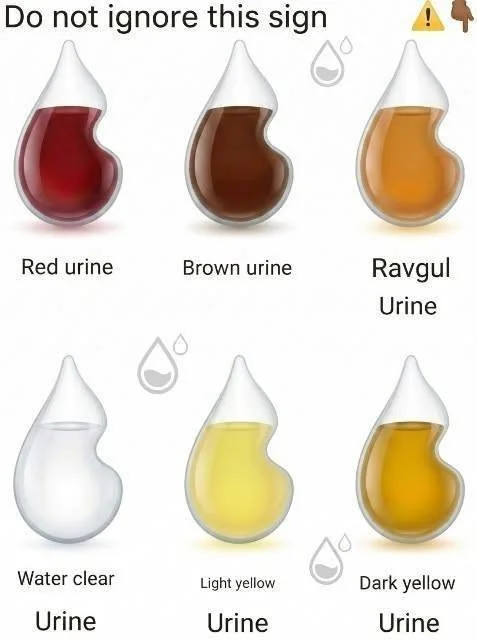
Most people use the bathroom several times a day without paying much attention to what they see before flushing. However, one small detail may provide useful information about your health: the color of your urine.
Urine is one of the body’s natural waste products. It is produced by the kidneys, which filter the blood, remove excess water and waste substances, and help maintain the body’s fluid and electrolyte balance.
Although urine color can change throughout the day, certain unusual changes may sometimes indicate dehydration, medication effects, dietary influences, or an underlying medical condition.
From pale yellow to dark amber, red, brown, or even cloudy white, different urine appearances can have different explanations.
This does not mean that every unusual color signals a serious illness. For example, eating certain foods or taking particular vitamins can temporarily change urine color.
Nevertheless, persistent or unexplained changes should not be ignored.
Understanding what urine color may indicate can help you recognize when something is normal and when it may be time to seek medical advice.
1. Clear Urine: Are You Drinking Too Much Water?
Completely clear urine is often associated with drinking a large amount of water.
When you consume fluids, your kidneys adjust how much water is retained and how much is eliminated through urine.
If you drink plenty of water, your urine may become very pale or almost transparent.
Occasionally having clear urine is generally not a concern, particularly if you have been drinking more fluids than usual.
However, consistently producing large amounts of completely clear urine may deserve attention.
Possible explanations include:
- Drinking excessive amounts of water.
- Consuming large quantities of other fluids.
- Taking certain medications that increase urination.
- Conditions that affect the body’s ability to regulate water balance.
For example, diabetes mellitus can cause increased thirst and urination when blood glucose levels are elevated.
Another condition, diabetes insipidus, affects the body’s ability to regulate water balance and can lead to unusually large amounts of dilute urine.
What should you do?
Avoid forcing yourself to drink excessive amounts of water simply to keep your urine completely clear.
For most healthy adults, pale yellow urine is a reasonable everyday indicator of hydration.
If you experience persistent excessive thirst, frequent urination, or unusually large urine volumes, consult a healthcare professional.

