
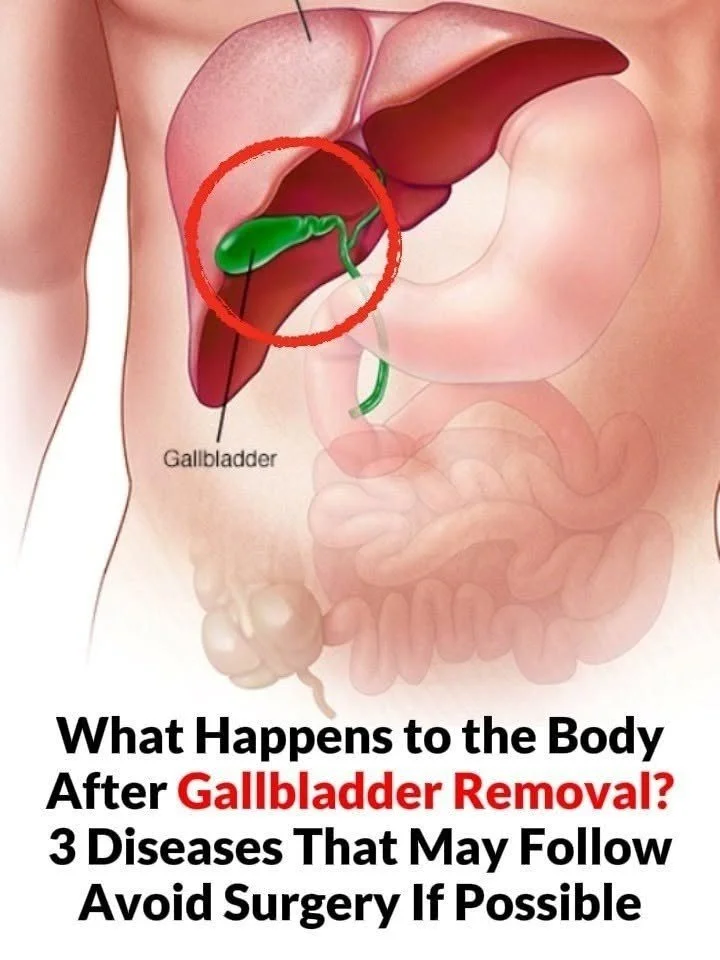
The gallbladder is a small, pear-shaped organ located just beneath the liver. Although it is relatively small, it plays an important role in digestion by storing and concentrating bile, a digestive fluid produced by the liver that helps the body break down dietary fats.
Many people live for years without experiencing any problems with their gallbladder. However, others develop gallstones, inflammation, infections, or other conditions that may eventually require surgery.
One of the most common procedures performed to treat serious gallbladder problems is called a cholecystectomy, which involves surgically removing the gallbladder.
But what happens to the body after this organ is removed?
Can you still digest food normally? Does bile continue to reach the intestines? Are there long-term complications? And why do some people experience digestive discomfort months or even years after surgery?
These are important questions, especially for anyone preparing for gallbladder surgery or recovering from the procedure.
The good news is that most people can live healthy, active lives without a gallbladder. The liver continues producing bile, and the digestive system adapts to the change.
However, some individuals experience digestive changes or complications after surgery.
Let’s examine three important problems that may occur after gallbladder removal, why they happen, and what you can do to support your digestive health.
1. Understanding What the Gallbladder Actually Does
Before discussing what happens after removal, it helps to understand the gallbladder’s normal function.
The liver continuously produces bile, a yellowish-green digestive fluid containing substances that help break down fats.
Instead of sending all this bile directly into the digestive system at once, the body stores some of it in the gallbladder.
When you eat a meal, particularly one containing fat, the gallbladder contracts and releases bile through small ducts into the first section of the small intestine.
There, bile helps emulsify fats, breaking them into smaller droplets that digestive enzymes can process more efficiently.
This process supports the absorption of dietary fats and fat-soluble vitamins, including vitamins A, D, E, and K.
When the gallbladder is removed, the liver does not stop producing bile.
Instead, bile flows more continuously through the bile ducts into the small intestine rather than being stored and released in larger amounts during meals.
Most people adapt to this change without significant long-term problems.
However, the digestive system may work somewhat differently, particularly when someone eats a large, fatty meal.

