
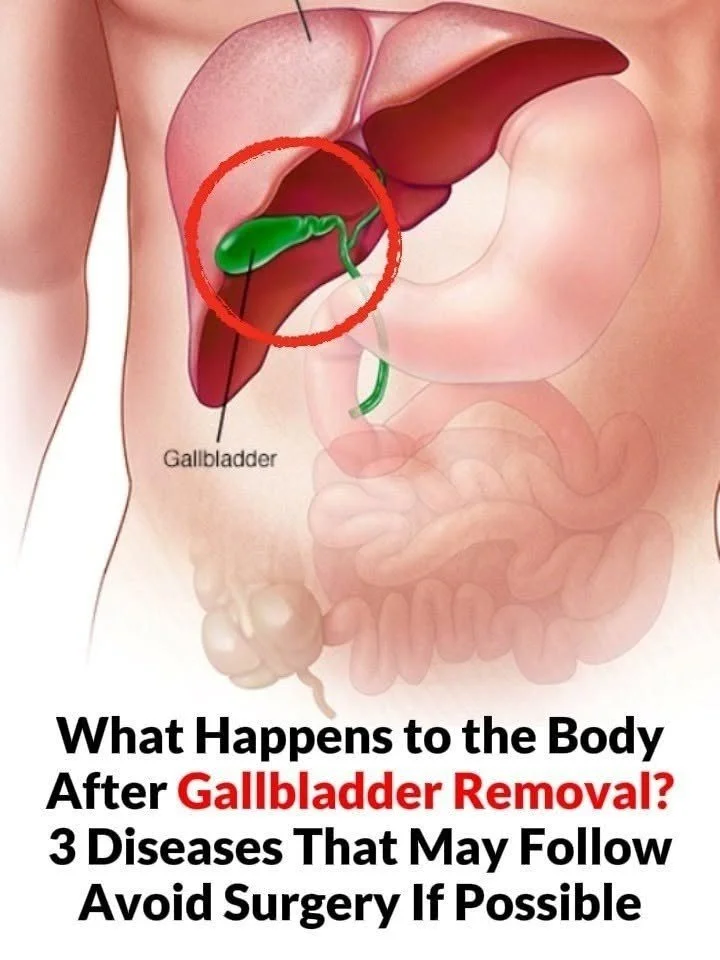
One of the digestive complaints reported by some people after gallbladder removal is diarrhea.
For certain individuals, bowel movements become more frequent, softer, or urgent after surgery.
This can happen because bile is no longer stored and concentrated in the gallbladder.
Instead, it flows more continuously into the intestine.
In some people, excess bile acids reach the colon, where they can stimulate water secretion and increase intestinal movement.
This condition is known as bile acid diarrhea.
What Are the Common Symptoms?
People experiencing this problem may notice:
Frequent loose or watery stools.
Sudden urges to use the bathroom.
Abdominal cramping.
Increased bowel movements after eating.
Symptoms that become worse after fatty meals.
Occasional bloating or digestive discomfort.
Not everyone develops these symptoms, and they do not necessarily occur immediately after surgery.
For some people, bowel habits gradually return to normal as the digestive system adapts.
What Can Help?
Dietary adjustments can make a difference.
Consider the following habits:
Eat Smaller Meals
Large meals may place additional demands on the digestive system.
Eating smaller portions throughout the day may help some people manage digestive discomfort.
Reduce Very Fatty Foods
Discover more
HERB
Herb
Ear
Foods containing large amounts of fat may worsen diarrhea in some individuals.
Consider limiting:
Deep-fried foods.
Fatty cuts of meat.
Heavy cream sauces.
Greasy fast food.
Large quantities of butter.
High-fat processed snacks.
You do not necessarily need to eliminate all dietary fat. Healthy fats remain an important part of a balanced diet.
Gradually Increase Fiber
Soluble fiber found in foods such as oats, bananas, apples, and legumes may help improve stool consistency.
Increase fiber gradually and drink sufficient water to avoid additional digestive discomfort.
Discuss Persistent Diarrhea With a Doctor
If diarrhea continues, a healthcare professional may investigate bile acid diarrhea and other possible causes.
Certain prescription medications, known as bile acid sequestrants, can bind bile acids in the intestine and help reduce symptoms.
Discover more
Study Chemistry
Shop Craft Beers
Study Anatomy
Treatment should be guided by a healthcare professional.
3. Second Possible Problem: Bile Duct Problems and Digestive Complications
The gallbladder is connected to the liver and small intestine through a network of small tubes called bile ducts.
These ducts transport bile from the liver into the digestive system.
Removing the gallbladder does not remove the bile ducts, and they continue performing their essential function.
However, complications involving the bile ducts can occasionally occur during or after surgery.
One possibility is a bile duct injury.
Although uncommon, this complication can be serious and may require additional treatment.
What Is a Bile Duct Injury?
During gallbladder removal, the surgeon separates the gallbladder from the surrounding structures.
Because the bile ducts and blood vessels are located close to the gallbladder, an injury can occasionally occur.
A damaged bile duct may allow bile to leak into the abdominal cavity or cause narrowing that interferes with normal bile flow.
Discover more
Find Treatments
Read Med Journals
Time Change
Symptoms may include:
Persistent abdominal pain.
Fever.
Nausea and vomiting.
Yellowing of the skin or eyes.
Dark-colored urine.
Pale stools.
Abdominal swelling.
These symptoms require prompt medical evaluation.
Can Gallstones Still Cause Problems After Surgery?
Yes.
Although the gallbladder has been removed, stones can occasionally remain in the bile ducts or develop there later.
A stone blocking a bile duct may prevent bile from flowing normally.
This can cause a condition called choledocholithiasis.
Possible symptoms include pain in the upper right or middle part of the abdomen, jaundice, nausea, and changes in urine or stool color.
If a stone blocks the common bile duct, it can sometimes lead to an infection called cholangitis or contribute to pancreatitis.
Discover more
Order Calendars
Order Vitamins
vitamin
These conditions require medical attention.
How Are Bile Duct Problems Treated?
Treatment depends on the specific complication.
Doctors may use blood tests and imaging examinations, such as ultrasound or magnetic resonance cholangiopancreatography, to investigate the problem.
In some cases, a procedure called endoscopic retrograde cholangiopancreatography (ERCP) can be used to remove stones from the bile duct.
More complicated injuries may require specialized endoscopic treatment or surgery.
The important point is that gallbladder removal does not automatically cause bile duct disease. These are recognized but relatively uncommon complications that should be understood rather than assumed to happen to everyone.
4. Third Possible Problem: Persistent Abdominal Pain and Indigestion
Some people continue experiencing digestive symptoms even after their gallbladder has been removed.
These symptoms are sometimes grouped under the term postcholecystectomy syndrome.
It is important to understand that this term describes a collection of symptoms rather than one specific disease.
Discover more
Look Up Facts
Learn a Language
Find Vector Art
Symptoms may include:
Abdominal discomfort.
Bloating.
Indigestion.
Nausea.
Diarrhea.
Fatty food intolerance.
Occasional upper abdominal pain.
There are several possible explanations.
Why Can Symptoms Continue?

