
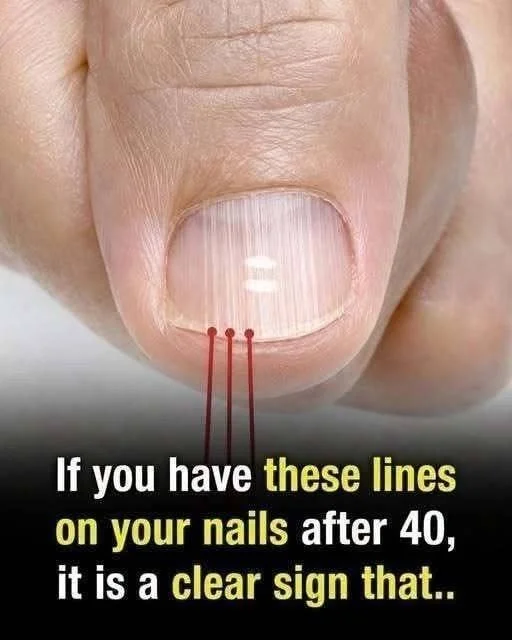
An important detail that many people overlook is that not all nail lines mean the same thing.
Vertical ridges and horizontal grooves have different appearances and may have different causes.
Vertical Ridges
Vertical ridges extend from the cuticle toward the tip of the nail.
They are commonly associated with:
Normal aging.
Dryness.
Nail trauma.
Certain skin conditions.
Occasionally, underlying nutritional or medical problems.
Most mild, gradual vertical ridges are harmless.
Horizontal Grooves
Horizontal grooves run across the width of the nail.
These are sometimes called Beau’s lines.
They can develop when nail growth temporarily slows or stops because of an illness, significant physical stress, injury, or certain medical treatments.
Possible triggers include:
Severe infections.
High fever.
Major surgery.
Significant physical stress.
Certain chemotherapy medications.
Serious nutritional disturbances.
Because fingernails grow gradually, a horizontal groove may remain visible for several months before growing out.
Discover more
HERB
Herb
Get Produce Boxes
The location of the groove can sometimes help healthcare professionals estimate when the disruption occurred.
When Should You Be Concerned About Nail Lines?
Although most vertical ridges are harmless, certain nail changes deserve medical attention.
Pay particular attention if you notice:
A new dark vertical stripe: A brown or black line appearing on one nail should be evaluated, especially if it becomes wider, changes color, has irregular borders, or extends onto the surrounding skin. Although many causes are benign, melanoma can sometimes develop beneath a nail.
Sudden nail discoloration: Yellow, green, brown, or unusual white discoloration may indicate an infection or another nail condition.
Pain or swelling: Redness, tenderness, swelling, or discharge around the nail may indicate an infection.
Nail separation: If the nail begins lifting away from the underlying skin, it may be associated with trauma, infection, psoriasis, or thyroid disease.
Rapid changes affecting several nails: Sudden changes in nail texture or growth may warrant medical evaluation, especially when accompanied by other symptoms.
Severe brittleness or unusual nail deformities: Persistent changes should be assessed rather than automatically attributed to aging.
Discover more
Browse Reference
Learn a Language
Order Drinks
A healthcare professional can examine the nails and determine whether further investigation is necessary.
How to Keep Your Nails Healthy After 40
You cannot completely prevent natural age-related changes, but several everyday habits can help maintain healthy nails.
1. Eat a Balanced Diet
Nails need adequate protein and essential nutrients.
Include a variety of foods such as:
Eggs.
Fish.
Chicken.
Beans.
Lentils.
Nuts.
Seeds.
Leafy green vegetables.
Fresh fruit.
Whole grains.
Eating a varied diet is generally more beneficial than relying on unnecessary supplements.
2. Moisturize Your Nails Regularly
Dryness can make nail ridges more noticeable.
Apply a moisturizer to your hands, nails, and cuticles several times throughout the day.
Ingredients such as glycerin, petrolatum, and ceramides can help maintain skin moisture.
3. Avoid Excessive Nail Treatments
Frequent gel manicures, acrylic nails, harsh removers, and aggressive filing can weaken the nail plate.
Discover more
Ear
Bananas
Study Anatomy
Give your nails occasional breaks from cosmetic treatments.
Use gentle nail-care techniques and avoid removing the cuticles.
4. Protect Your Hands
Wear gloves when handling household cleaning products or spending extended periods with your hands in water.
This can help prevent dryness, irritation, and nail damage.
5. Trim Your Nails Carefully
Keep your nails at a comfortable length and use clean nail clippers.
File rough edges gently rather than repeatedly cutting or scraping the nail surface.
6. Avoid Taking Supplements Without a Reason
Many products claim to eliminate nail ridges by providing high doses of vitamins and minerals.
However, supplements are most useful when a nutritional deficiency or specific need has been identified.
Taking excessive amounts of certain nutrients can create additional health problems.
If your nails have changed significantly, identifying the cause is more useful than immediately purchasing a supplement.
Discover more
Drink
Beverages
Find Barware
Do Vertical Nail Ridges Disappear?
This depends on the underlying cause.
If the ridges are associated with normal aging, they may remain permanently or become more noticeable over time.
If dryness or repeated trauma contributes to the problem, improving nail care may make the surface look healthier as new nail grows.
When a medical condition or nutritional deficiency is responsible, treating the underlying problem may improve nail appearance.
However, fingernails grow slowly. It can take several months for a damaged section of a fingernail to grow out completely.
Toenails generally take considerably longer.
Patience is therefore important when monitoring changes.
Final Thoughts
Noticing vertical lines on your fingernails after 40 can be surprising, particularly if your nails were previously smooth.
The good news is that these lines are usually harmless and frequently reflect normal changes associated with aging.
Nevertheless, nail appearance can sometimes provide useful information about general health.
Discover more
Book Workouts
Build Muscle
Find Lung Care
Nutritional deficiencies, thyroid disorders, skin conditions, repeated trauma, and other medical issues may affect the nails in different ways.
The most important thing is to pay attention to the overall pattern rather than assuming that every ridge indicates a serious condition.
If the lines develop gradually on several nails without other symptoms, they are often nothing to worry about. However, sudden changes, unusual pigmentation, pain, swelling, or nail separation should not be ignored.
Healthy nails are supported by good nutrition, gentle care, adequate moisture, and attention to changes that persist over time.
Remember: Vertical nail ridges after 40 are not automatically a warning sign of disease. Understanding their appearance and recognizing unusual changes is the best way to protect your nail health.

