
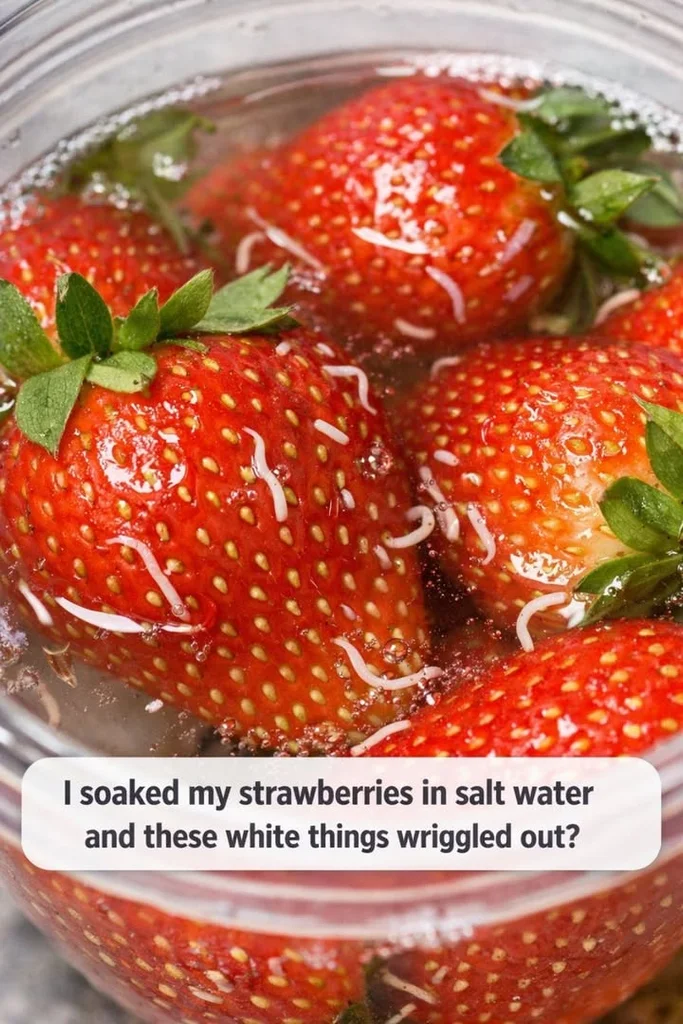
# I Soaked My Strawberries in Salt Water and These White Things Wriggled Out
I soaked my strawberries in salt water and what happened next completely shocked my family. If you think the vibrant, juicy red fruit straight from the grocery store or farmers market is completely ready to eat after a quick rinse under the tap, you might want to think again. Across kitchens everywhere, people are discovering a startling reality hiding right beneath the surface of their favorite fresh produce. When you submerge fresh fruit in a saline solution, you might just find tiny, unexpected visitors crawling out of the crevices. 🍓
Understanding what is really living on our fresh fruit can be unsettling, but it is an essential part of maintaining a mindful and healthy kitchen routine. Strawberries have a soft, porous skin and tiny external seeds that create the ultimate cozy microhabitat for microscopic organisms and insect larvae. When you skip a proper deep clean, you are unknowingly inviting these uninvited guests right into your digestive system. Let's dive deep into why this happens, what those mysterious white things actually are, and how you can safely handle your produce moving forward.
---
## Why Fresh Produce Harbors Hidden Guests
Nature is a bustling ecosystem, and delicious, nutrient-dense fruits like strawberries are prime targets for various insects looking to lay eggs. Spotted wing drosophila and other small fruit flies frequently deposit microscopic eggs deep inside the soft flesh or under the protective caps of developing berries. Because conventional quick rinses with plain water only remove surface dust and loose soil, these resilient little hitchhikers remain safely nested inside.
When you introduce a hypertonic environment—like water infused with ordinary table salt—the osmotic pressure forces these organisms to react. The sudden shift in salinity causes tiny insect larvae, commonly known as fruit fly maggots, to become deeply uncomfortable and wriggle their way out into the open water to escape the heavy concentration of salt. Witnessing this phenomenon for the first time can make anyone lose their appetite, but it is actually a testament to the effectiveness of proper washing techniques.
---
## The Science of Salt Water Soaks and Safety
Using a salt water soak is an age-old alternative culinary practice designed to draw out impurities, neutralize lingering pesticide residues, and coax out any hidden pests before consumption. Scientific evaluations of fruit washing methods consistently show that simple immersion in a mild saline or white vinegar solution significantly reduces microbial loads compared to water alone. However, seeing those tiny white creatures wriggling out can trigger an intense psychological reaction, leaving many wondering if they should throw away their entire basket of berries. 🪄
Despite the initial shock value, eating thoroughly washed produce that previously contained invisible pests is generally not harmful, as the stomach acid safely neutralizes them. The real danger lies in consuming unwashed or improperly rinsed fruit that harbors harmful foodborne bacteria like Salmonella, E. coli, or pesticide chemicals from agricultural applications. This is precisely why mastering the correct cleaning protocol is so much more important than panicking over a natural occurrence. But before you banish strawberries from your diet forever, the exact secret to completely purging your fruit without losing its crisp texture involves one unexpected household ingredient....👇👇

