
One of the simplest ways to loosen stubborn grease is to soak the removable basket and tray in warm water with a little mild dishwashing liquid.
Fill the sink with enough warm water to cover the dirty components.
Add a small amount of dish soap and allow the parts to soak for approximately 10–15 minutes, depending on how heavily soiled they are.
The warm water helps soften dried food, while the detergent loosens grease.
After soaking, use a soft sponge or nonabrasive brush to clean the basket, tray, corners, and openings.
Pay particular attention to areas where oil and crumbs have collected.
If food remains stuck, soak the component a little longer instead of scrubbing aggressively.
Avoid steel wool, metal scouring pads, and harsh abrasive cleaners, especially on nonstick surfaces.
A damaged coating can make the basket more difficult to clean and may affect its performance.
4. Use a Soft Brush for Hard-to-Reach Areas
Air fryer baskets often contain small holes, ridges, and corners that can trap food particles.
A soft nylon brush or a suitable nonabrasive cleaning brush can help reach these areas.
Discover more
dessert
Drink
Find Recipes
After soaking, gently brush the openings and edges to remove loosened residue.
Do not force sharp objects into the holes, and avoid tools that could scratch the coating.
If grease remains trapped in a corner, apply a little soapy water and allow it to work before trying again.
The goal is to loosen the residue rather than remove it through force.
Once the basket and tray are clean, rinse them thoroughly with fresh water to remove any remaining detergent.
5. Clean the Inside of the Air Fryer
While the removable components are drying, inspect the inside of the air fryer.
Food crumbs and grease may accumulate around the drawer opening and on the interior surfaces.
Make sure the appliance remains unplugged and completely cool.
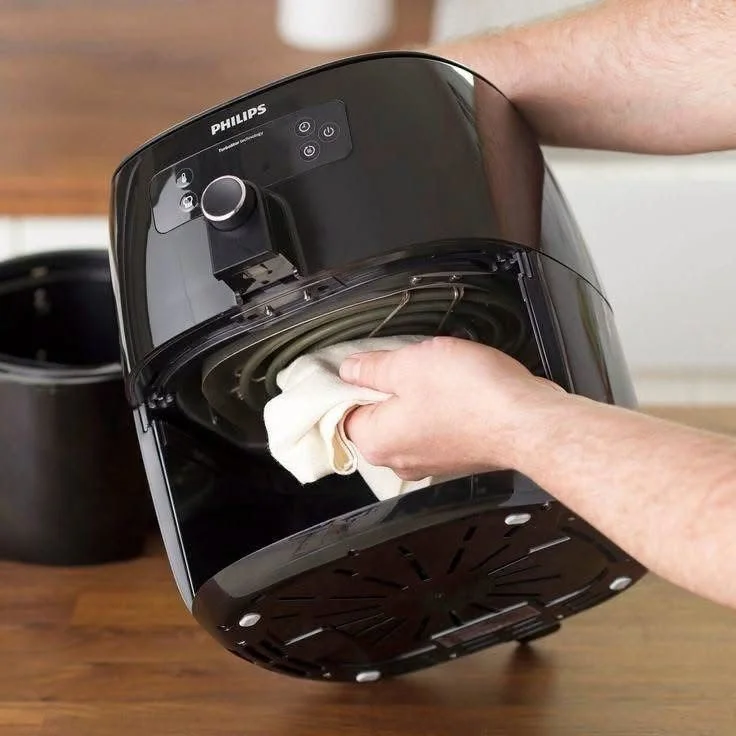
Use a soft, slightly damp microfiber cloth to wipe accessible interior surfaces.
If necessary, add a small amount of mild dish soap to the cloth, then wipe again with a clean, damp cloth to remove any detergent residue.
Do not pour water directly into the appliance.
Discover more
Try New Foods
Foods
Get Produce Boxes
Avoid soaking the interior or allowing liquid to enter electrical openings, vents, or other components that are not intended to become wet.
Dry the cleaned surfaces with a soft cloth before reassembling the appliance.
6. How to Clean the Heating Element
The heating element is one of the areas that air fryer owners sometimes overlook.
Depending on the model, it is located near the top of the cooking chamber and may collect small food particles, grease, and residue over time.
These deposits can contribute to unpleasant smells or smoke during cooking.
To inspect this area, unplug the appliance and let it cool completely.
Remove the basket and drawer.
Follow the manufacturer’s instructions for accessing the heating element. Some models allow the appliance to be tilted carefully to improve visibility, while others may have different cleaning requirements.
Use a dry, soft brush to remove loose crumbs from accessible areas.
If the manufacturer permits damp cleaning of specific surfaces, use a barely damp cloth and apply it only where appropriate. Avoid wetting electrical connections or the heating element itself.
Discover more
Study Plants
Order Bulk Seeds
Breakfast
Never spray cleaner directly onto the heating element.
Do not scrape it with a knife, metal brush, or other sharp object.
If grease has accumulated heavily or the element is difficult to access, consult the manual or contact the manufacturer rather than dismantling the appliance.
Never immerse the air fryer’s main body in water.
7. What About Baking Soda and Vinegar?
Many household cleaning tips recommend baking soda and vinegar for removing stubborn grease.
However, you do not need to combine these ingredients to clean an air fryer effectively.
Baking soda is mildly abrasive and may damage certain nonstick coatings if rubbed aggressively.
Vinegar is acidic and may not be suitable for every component or finish.
Combining baking soda and vinegar also causes an acid-base reaction that produces carbon dioxide. Although the resulting bubbling may look impressive, it does not necessarily make the mixture a better degreaser.
For routine cleaning, warm water and mild dish soap are generally a more appropriate starting point.
Discover more
Find Brunch Spots
Instant Potatoes
Instant Mashed Potatoes
If a manufacturer specifically recommends another cleaning method, follow those instructions.
Never mix cleaning products indiscriminately, and avoid applying chemicals to food-contact surfaces unless they are intended for that use and can be removed according to the label.
8. Remove Stubborn Grease Without Damaging the Coating
Sometimes, grease becomes difficult to remove because it has been repeatedly heated.
If ordinary washing does not work, try this approach:
Make sure the removable component is cool.
Soak it in warm, soapy water for 15–20 minutes.
Gently loosen the residue with a soft sponge.
Use a soft brush for corners and grooves.
Rinse thoroughly.
Repeat the process if necessary.
Avoid trying to remove everything in one aggressive scrubbing session.
Repeated gentle cleaning is usually safer for nonstick surfaces than scraping with hard tools.
If the coating is peeling, flaking, or badly scratched, consult the manufacturer about whether the component should be replaced.
Do not continue using a damaged cooking surface without checking the manufacturer’s guidance.
9. Dry Every Component Thoroughly

