
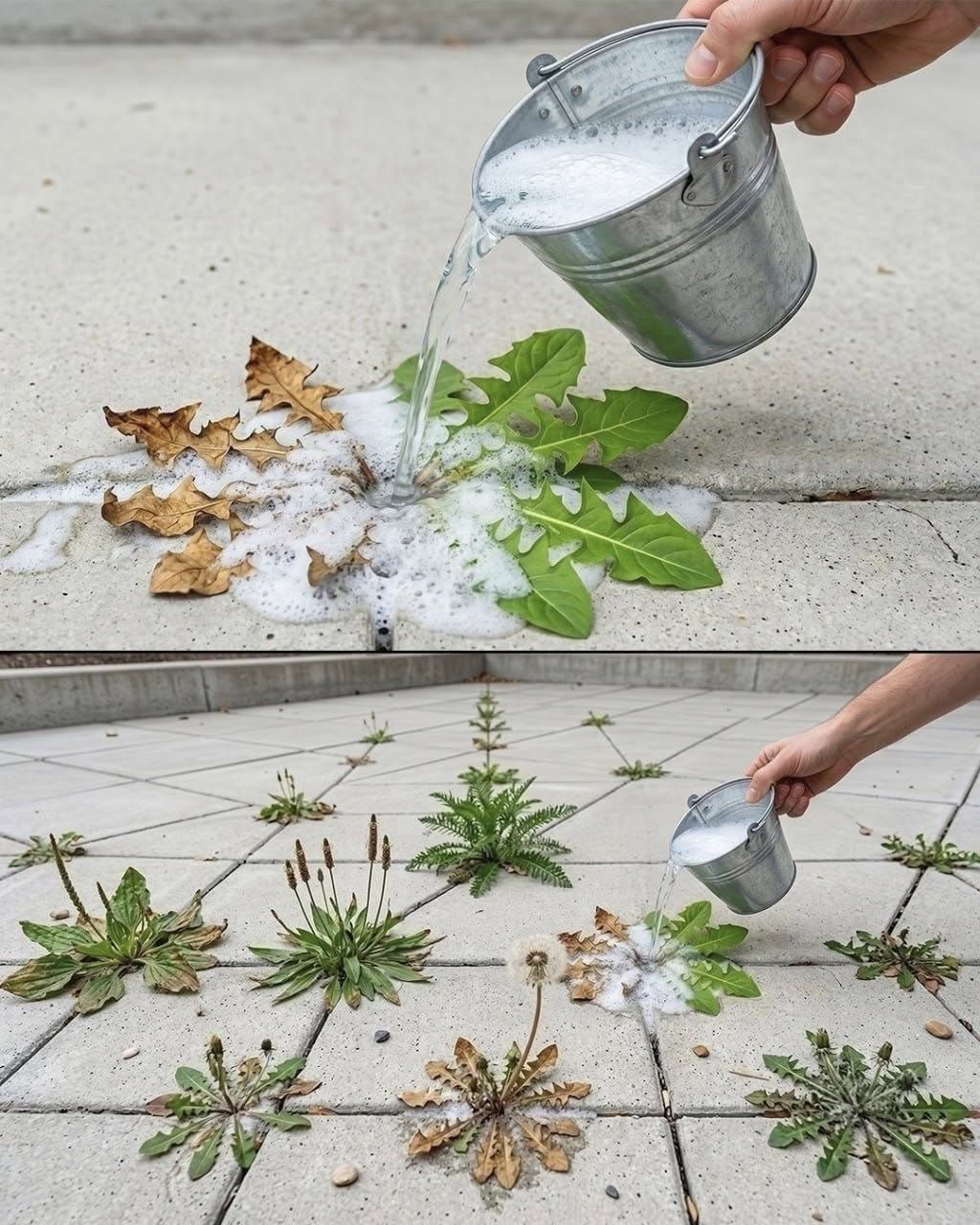
The effectiveness of this homemade spray relies on the synergistic action of four specific household products. The main active ingredient is white vinegar. It contains acetic acid, which damages plant tissue and draws moisture from surface cells upon contact with the weed, causing it to wilt and dry out. Table salt acts as a powerful desiccant. Through a process called osmosis, it draws water from the plant's cells, severely dehydrating the weed. Citric acid is added to increase the overall acidity of the mixture, further intensifying the damage to exposed leaf tissue. Finally, dishwashing liquid plays a key supporting role. Plant leaves are naturally coated with a waxy substance that repels water. Soap breaks this surface tension, allowing the acidic solution to adhere to the leaves rather than run off to the ground.
Preparing this herbicide is simple. You'll need 300 milliliters of water, 200 milliliters of white vinegar, one tablespoon of salt, one tablespoon of citric acid, and one tablespoon of dishwashing liquid. After combining these ingredients, add another liter of water to dilute the mixture. Stir the solution thoroughly until the salt and citric acid are completely dissolved, then, if necessary, strain and pour into a spray bottle. For best results, spray on a warm, sunny day, as heat and sunlight accelerate the dehydration process. Spray the solution directly onto the weed leaves, avoiding windy conditions that can cause drift. Always wear gloves and safety glasses, and be extremely careful to avoid spraying on desirable plants.
When using natural remedies, it's important to manage expectations. Many people assume that homemade sprays will work exactly like commercial systemic herbicides, which are absorbed through the leaves and distributed downward, destroying the roots. However, this homemade mixture is strictly a contact herbicide. It only damages the parts of the plant it physically touches. Although leaves may wilt within a few hours and die completely after a day or two, the deep root system often survives. With perennial weeds, new growth can easily take several weeks to emerge, meaning that repeated applications are often necessary to achieve full control.
To see the FULL PREPARATION STEPS, go to the next page or click the Open button (>) and don't forget to SHARE this with your friends on Facebook

